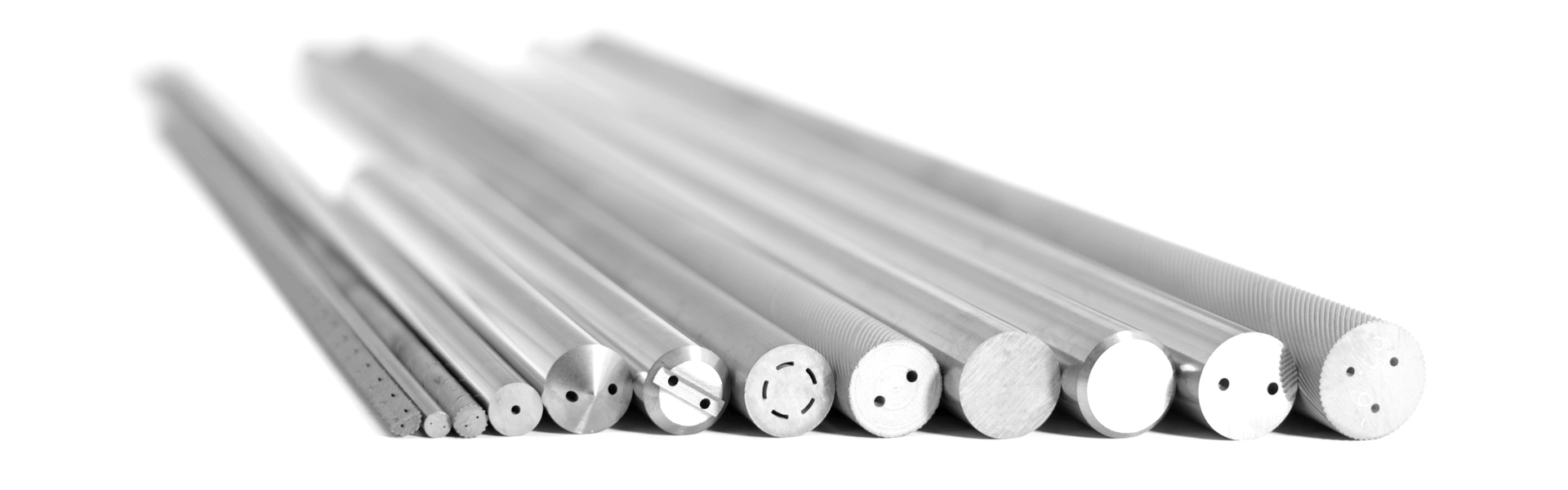
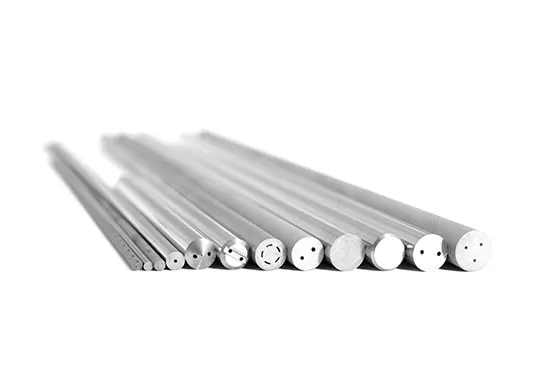
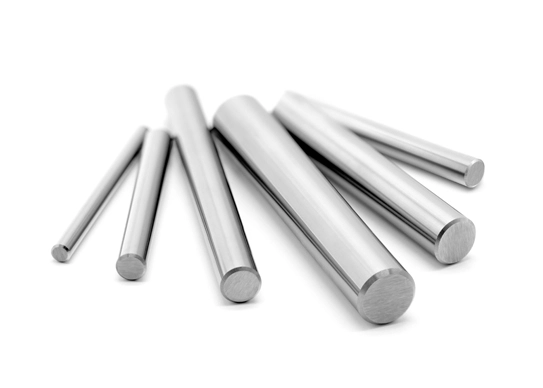
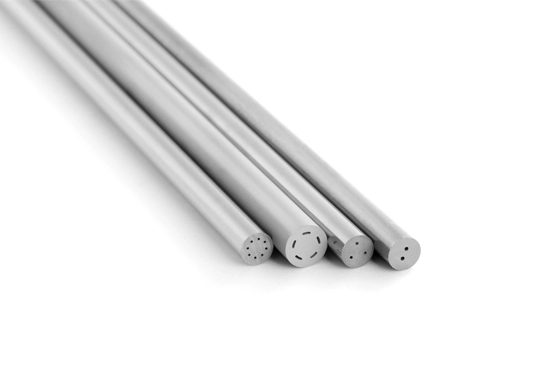
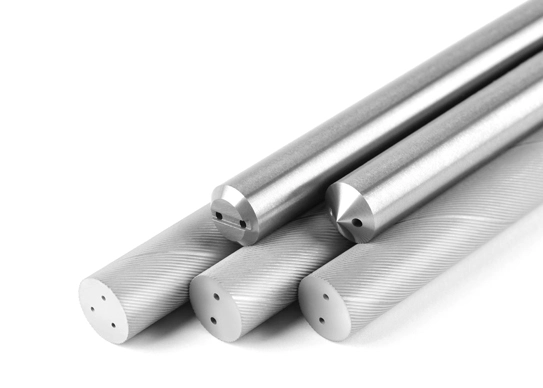
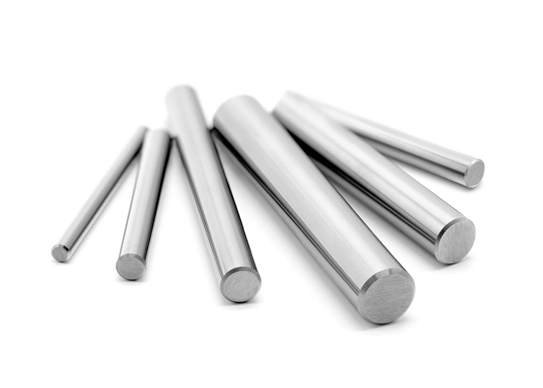
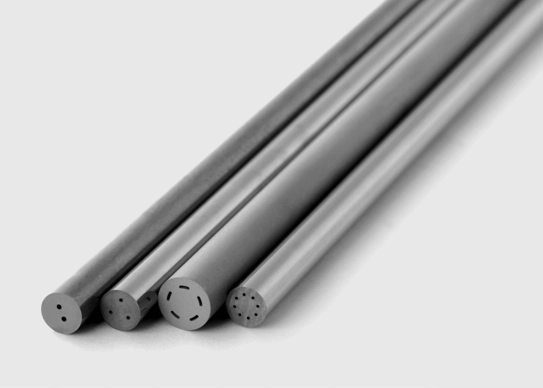
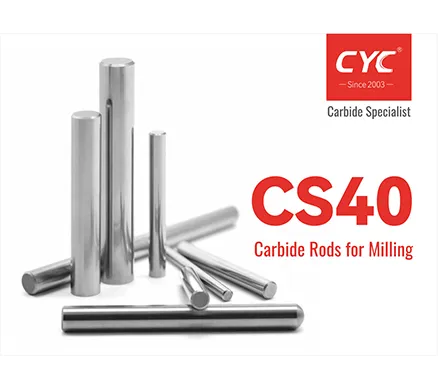
CYC offers high-performance carbide rods designed for a wide range of cutting and machining applications. Our rods are known for their durability, toughness, and wear resistance, making them ideal for demanding environments. Available in various sizes and grades, our carbide rods provide the precision and reliability required for top-tier manufacturing processes. Whether for end mills, drills, or reamers, CYC's cemented carbide rods help improve tool life and machining efficiency.
Grade Chart
Grades | Binder% | Hardness | T.R.S ≥N/mm² | Density g/cm³ | KIC MPa*m1/2 | Grain Size | ISO Code | Application |
HRA | HV10 |
MH10F | 10 | 91.8 | 1600 | 3800 | 14.45 | 11.0 | Submicron | K30 | An excellent universal grade to cover most of the cutting applications for materials (ISO P,M,K,N). |
CS43 | 12 | 92.5 | 1720 | 4500 | 14.20 | 11.0 | Ultrafine | K40 | High toughness, high wear resistance. Suitable for ISO P,M,S,H finishing. |
CS40 | 12 | 91.5 | 1560 | 4000 | 14.15 | 13.0 | Submicron | K40 | Suitable for roughing and machining under extreme conditions/environments. |
SH904 | 9 | 94.0 | 2040 | 4000 | 14.45 | 8.5 | Superfine | K30 | Made of superfine grain size 0.3-0.4 um, high wear resistance and impact strength for meeting the most critical cutting challenges in composite materials including CFRP, graphite and hardened steels >60HRC. |
UH8 | 8 | 93.2 | 1860 | 3300 | 14.60 | 9.0 | Ultrafine | K20 | Ultrafine carbide grade with high hardness suitable for profiling hardened materials (50-60HRC) and finishing, and for machining of non-ferrous metals such as aluminum. |
MH7 | 6 | 93.1 | 1850 | 3600 | 14.85 | 8.5 | Submicron | K10 | A grade with high wear resistance for machining aluminum alloys, graphite, composite materials and suitable for diamond coating. |
CH03D | 3 | 93.2 | 1860 | 1800 | 15.25 | 9.5 | Fine | K05 | High performance grade for diamond coated tools, which is used for machining graphite, composite materials, CFRP. |
*Above data are typical parameters.