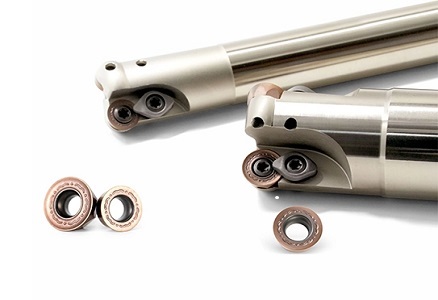
As high-end industries such as aerospace, new energy vehicles, precision die & mold, and medical devices continue to advance, difficult-to-machine materials—including titanium alloys, high-temperature alloys, stainless steels, and mold steels—are being used more widely.
These materials place high demands on cutting tools, especially in hardness, strength, toughness, and machining stability. For many manufacturers, this often means keeping multiple carbide rod grades in stock for different materials and machining conditions. The result is more complex grade selection, frequent tool changes, higher inventory pressure, and increased production costs.
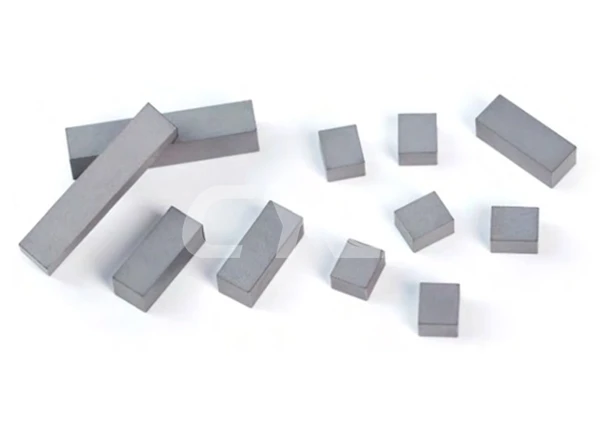
To address these challenges, CY Carbide developed CS43, a versatile high-performance carbide rod grade. With its broad material compatibility and stable performance, CS43 helps global manufacturers improve efficiency, reduce tooling costs, and simplify carbide grade selection.
Why Are Versatile Carbide Rods Becoming More Important?
In traditional machining strategies, manufacturers often select dedicated carbide grades for different materials. For example, stainless steel machining usually requires higher toughness, titanium alloys demand strong chipping resistance, and heavy roughing calls for excellent strength.
However, managing multiple grades increases both selection and operational complexity. It can also lead to excess inventory, more capital tied up in stock, and downtime caused by frequent tool changes, ultimately increasing costs and reducing efficiency.
CS43 is designed to address this challenge with a “one grade, multiple applications” approach. It enables one carbide rod grade to cover a wide range of machining needs, helping manufacturers simplify grade selection, reduce inventory pressure, and streamline material management. By reducing the need for frequent grade changes, CS43 also helps minimize downtime, improve equipment utilization, and deliver measurable gains in both cost efficiency and productivity.
What Makes CS43 a High-Performance Carbide Rod Grade?
The key strength of CS43 lies in its balanced combination of strength, hardness, and toughness. Key performance data:
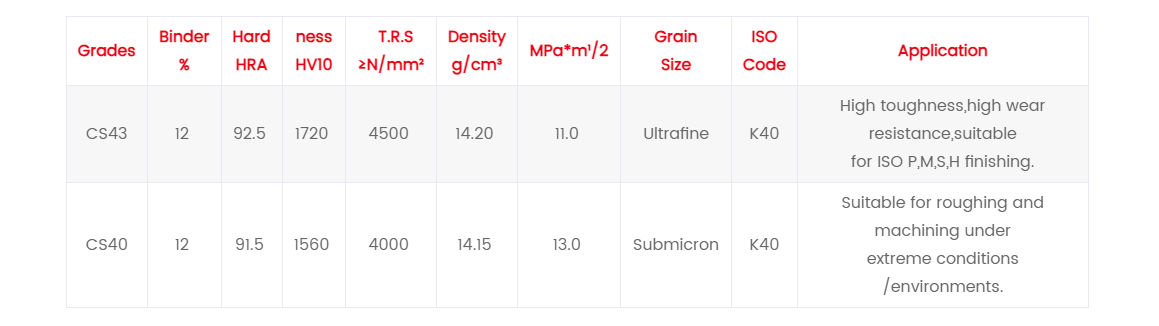
CS43 features a unique dual-phase alloy structure with precisely controlled WC grain distribution and morphology, delivering a strong balance of hardness and toughness. Combined with 0.4 µm ultrafine-grade raw materials and binder-phase solid-solution strengthening, it offers improved wear resistance and chipping resistance. Strict process control from powder preparation to sintering ensures stable performance and high batch-to-batch consistency.
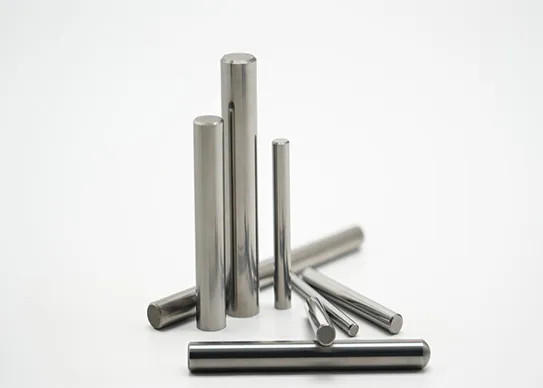
This makes CS43 suitable for heavy roughing as well as semi-finishing and finishing operations requiring reliable precision. For applications with stronger impact and severe wear, CS40 serves as a complementary grade, giving customers a broader solution across demanding machining environments.
How Does CS43 Perform in Titanium Alloys, Stainless Steels, and Other Difficult Materials?
Strong technical data must be proven in real cutting conditions. Through extensive cutting tests, CS43 has demonstrated excellent versatility.
Covers multiple ISO material groups, including ISO P steels, ISO M stainless steels, ISO N non-ferrous metals, and ISO S titanium alloys.
Suitable for roughing, semi-finishing, and finishing.
In titanium alloys and high-temperature alloys, CS43 shows good wear resistance and chipping resistance, with performance comparable to imported premium grades.
With these advantages, CS43 is well suited for aerospace, new energy vehicles, precision die & mold, and medical device applications, helping manufacturers maintain stable and efficient production in complex machining environments.
Conclusion
With its balanced combination of high strength, high hardness, and high toughness, CY Carbide CS43 helps solve a common challenge in advanced manufacturing: machining multiple materials under different working conditions with fewer carbide grades. Beyond its technical performance, it delivers strong value in versatility, stability, and cost efficiency, providing customers with a highly competitive carbide solution. From die & mold manufacturing to aerospace applications, CS43 is a trusted choice where machining efficiency and material reliability matter.
Contact CY Carbide to request CS43 samples or get expert support in selecting the right carbide grade for your application. Together, we advance manufacturing with high-performance carbide materials.
CY Carbide — Over 20 years of expertise in high-performance carbide materials, delivering reliable cutting solutions for global manufacturing.