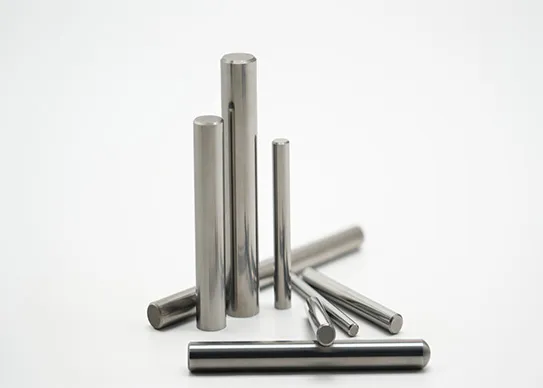
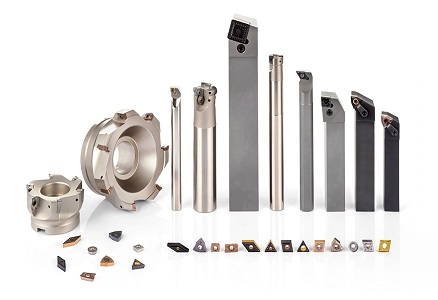
Reliable carbide insert wholesale supply is not simply about finding the lowest unit price. Industrial buyers need consistent carbide grades, stable geometries and coatings, dependable production capacity, application support, and repeatable quality from batch to batch.
For cutting tool OEMs, distributors, and machining companies, the quality and consistency of carbide insert materials directly influence tool life, machining stability, surface quality, and production efficiency.
What Industrial Buyers Should Expect from Carbide Insert Material Supply
A professional carbide material supplier should provide more than standard material grades. Buyers should evaluate whether the supplier can maintain consistency across carbide composition, substrate properties, grade performance, dimensional control, and customization capability.
Important sourcing factors include:
Stable carbide grade and raw-material control
Repeatable dimensions and cutting-edge preparation
Multiple grades for steel, stainless steel, cast iron, and difficult-to-machine materials
CVD and PVD coating capabilities
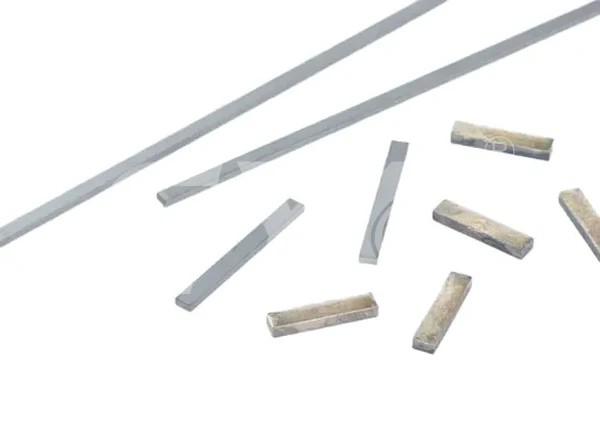
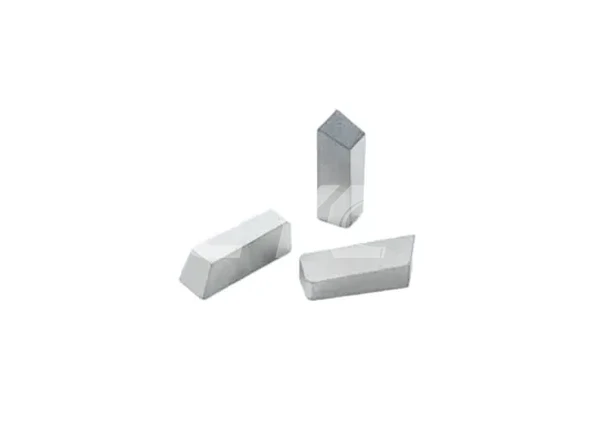
Carbide grades suitable for turning, milling, drilling, and grooving insert production
Customized carbide material solutions
Stable production capacity for repeat and volume orders
OEM/private-label and customized insert capability
Reliable capacity for repeat and volume orders
Technical support for grade and geometry selection
CYC also emphasizes consistency, product range, customization, and technical service as important criteria when buyers compare carbide insert suppliers.
Price remains important, but a small purchasing saving can quickly disappear if inconsistent inserts cause premature wear, unexpected tool changes, scrap, or machine downtime.
From Powder to Grade Selection: How Carbide Insert Materials Are Developed
Understanding production helps purchasing teams evaluate why two visually similar inserts may perform very differently.
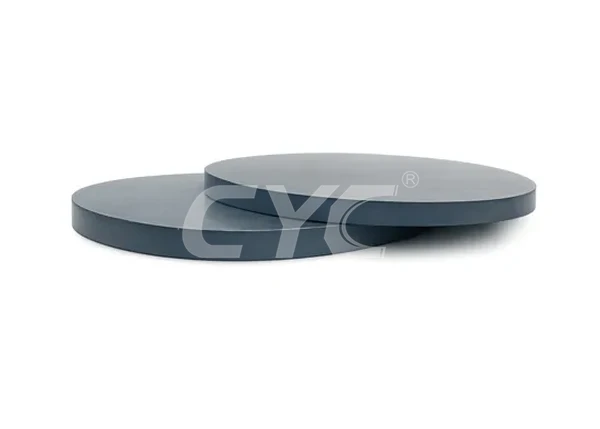
Carbide insert material production begins with carefully controlled tungsten carbide powders, binders, and material formulations. These materials are processed and sintered to create cemented-carbide substrates with controlled hardness, toughness, and wear resistance. Sandvik Coromant's insert-production documentation similarly identifies carbide insert manufacturing as a controlled industrial process designed to produce tools capable of withstanding high cutting temperatures and forces.
After sintering, additional operations may include grinding, edge preparation, surface treatment, and coating.
The selected cnc insert material is especially important. Changes in carbide grain structure, binder content, and coating system affect the balance between hardness, toughness, wear resistance, and cutting-edge reliability.
For coated carbide machining inserts, PVD and CVD technologies can further improve performance against wear, friction, oxidation, and high cutting temperatures. CYC provides carbide grades and material solutions for producing carbide milling inserts used in roughing and finishing applications.
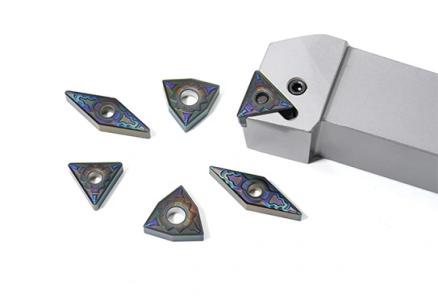
Turning Inserts Factories and Milling Inserts Manufacturers: Why Carbide Material Quality Matters
When comparing turning inserts factories and milling inserts manufacturers, buyers should evaluate whether their carbide material supplier can provide stable grades and performance consistency rather than simply standard material options.
Turning applications may require different combinations of chip control, edge strength, coating, and substrate toughness depending on whether the operation involves finishing, medium machining, roughing, continuous cutting, or interruption.
The same principle applies when evaluating milling inserts manufacturers. Milling introduces repeated entry and exit from the workpiece, making edge strength and thermal-mechanical stability particularly important. Milling inserts must also be matched to cutter design, engagement, workpiece material, and roughing or finishing requirements.
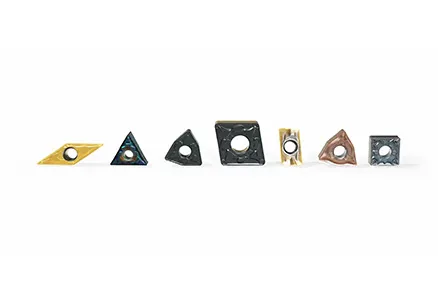
CYC's current product range includes carbide turning inserts for steel, stainless steel, cast iron, and high-hardness materials, together with carbide milling inserts for general machining, cast iron, and high-hardness applications.
For industrial buyers, a broad product catalog is useful, but repeatable manufacturing capability is more important. The supplier should be able to reproduce the same cutting performance when the next production batch arrives months later.
Supporting OEMs, Distributors and Industrial Machining Operations
Different buyers have different requirements from carbide insert wholesale partners.
Cutting tool OEMs often require customized substrates, geometries, edge preparation, coatings, packaging, and private-label support.
Industrial distributors need a broad product range, predictable replenishment, competitive wholesale structure, and technical information that helps their sales teams recommend the correct insert.
Machining factories usually focus more heavily on productivity: tool life, cutting parameters, chip control, surface finish, and cost per finished component.
A supplier capable of supporting all three groups should be able to discuss the actual machining application—not merely cross-reference an insert designation.
CYC provides carbide material solutions for turning, milling, drilling, grooving, and other precision insert applications, supporting OEMs and tool manufacturers with stable grades and customized solutions.
FAQs About Carbide Insert Wholesale
How do I choose a reliable carbide insert supplier?
Evaluate carbide material consistency, grade range, customization capability, production capacity, quality control, and technical support.
What information should I provide when selecting carbide insert materials?
Provide the insert designation, workpiece material, machining operation, cutting speed, feed, depth of cut, coolant condition, machine stability, current tool-life problem, and target surface finish. These details help the supplier recommend the correct cnc insert material and chipbreaker.
What is the difference between turning and milling inserts?
Turning inserts primarily cut rotating workpieces on lathes, while milling inserts are mounted in rotating cutters for machining faces, shoulders, pockets, and other features. Their cutting-force patterns and edge-strength requirements therefore differ.
Are coated carbide inserts better than uncoated inserts?
Not universally, but coatings can substantially improve wear resistance and thermal performance when the coating, substrate, and application are properly matched. PVD and CVD coatings are widely used on modern cnc carbide inserts for this reason.
What matters most when buying carbide inserts in bulk?
Consistency. A successful wholesale program depends on receiving the same geometry, substrate quality, coating performance, and dimensional accuracy from batch to batch. Reliable carbide material suppliers should therefore be evaluated on process control, material consistency, and long-term supply capability as well as price.
For OEMs, distributors, and machining companies looking for a dependable source of carbide machining inserts, CYC provides turning, milling, drilling, grooving, and customized carbide solutions designed to support both standard and volume-production requirements.