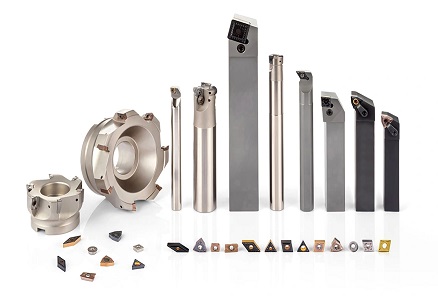
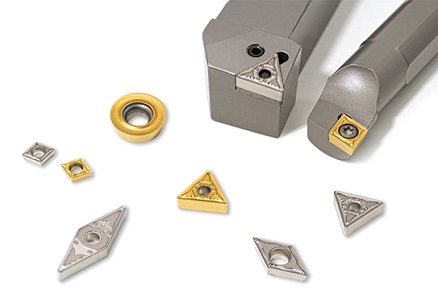
The performance of a tungsten carbide insert depends on more than carbide hardness alone. Material composition, WC grain size, cobalt content, grade design, substrate quality, geometry, and manufacturing precision all influence how an insert performs under actual cutting conditions.
For applications such as turning, milling, grooving, and precision machining, tungsten carbide turning inserts must be selected according to the workpiece material, cutting conditions, and required balance between wear resistance and toughness. Understanding these factors also helps buyers evaluate technical capabilities when comparing carbide insert suppliers.
What Materials Are Used to Make Tungsten Carbide Inserts?
Most tungsten carbide inserts are based on tungsten carbide (WC) particles bonded with cobalt. The WC phase provides hardness and wear resistance, while the cobalt binder contributes toughness and fracture resistance.
The balance between these constituents can be adjusted according to the intended application. A higher binder content generally improves toughness, which is valuable for interrupted cutting and high-impact conditions. Lower binder content can increase hardness and wear resistance for applications where edge stability is more important.
Grain size is another important variable. Fine-grain carbide can provide higher hardness and edge strength, while coarser structures generally offer greater resistance to impact and fracture.
Some grades also incorporate additional carbide phases such as titanium carbide, tantalum carbide, or niobium carbide to modify high-temperature performance, wear behavior, or resistance to deformation.
How Are Tungsten Carbide Grades Selected for Different Cutting Applications?
There is no single carbide grade that performs optimally in every machining operation. Grade selection should reflect the relationship between cutting speed, mechanical load, workpiece hardness, and cutting continuity.
For high-speed finishing, a harder and wear-resistant grade may be appropriate because the cutting edge experiences substantial thermal and abrasive stress. Heavy roughing or interrupted cutting usually requires greater toughness to prevent edge chipping.
For example, a stable continuous turning operation on steel can tolerate a different carbide structure from interrupted machining of cast iron. Similarly, high-feed milling places different demands on the cutting edge from precision finishing.
A useful approach is to consider grade selection as a hardness-versus-toughness balance, rather than simply choosing the hardest available material.
What Should You Consider When Manufacturing Carbide Inserts?
Manufacturing consistency has a direct effect on insert performance. Tungsten carbide inserts are typically produced through powder preparation, mixing, pressing, sintering, grinding, and inspection.
Powder characteristics must be carefully controlled because variations in particle distribution or binder composition can affect the final microstructure. During sintering, temperature and atmosphere control are particularly important for achieving a consistent carbide structure.
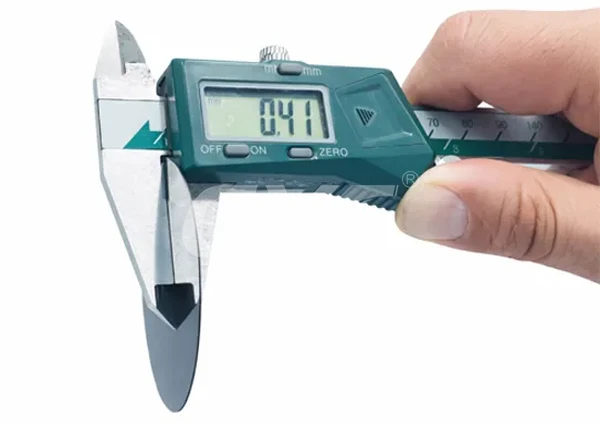
After sintering, precision grinding establishes the insert's final dimensions, cutting geometry, edge preparation, and surface condition. For precision machining, even small dimensional deviations can influence tool positioning, cutting forces, and finished-part accuracy.
Quality control should therefore cover both material properties and dimensional characteristics rather than relying on hardness testing alone.
Why Does Grain Size Matter in Tungsten Carbide Inserts?
WC grain size has a significant influence on the mechanical behavior of carbide.
Fine-grain structures can provide high hardness and strong cutting-edge performance, making them suitable for precision applications where wear resistance and edge sharpness are important. Coarse-grain structures generally provide improved toughness and are better suited to applications involving impact or interrupted cutting.
However, grain size should not be considered independently. Binder content, carbide composition, sintering quality, and insert geometry all contribute to the final performance of the grade.
How Important Is Edge Preparation for Tungsten Carbide Turning Inserts?
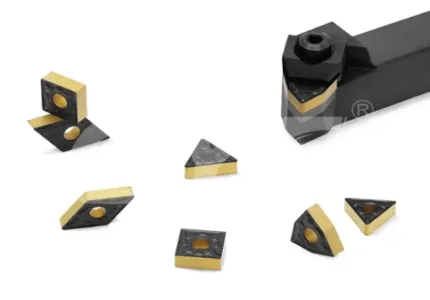
Edge preparation is particularly important for tungsten carbide turning inserts because the cutting edge must withstand mechanical and thermal loads without unnecessary cutting resistance.
A sharp edge can reduce cutting forces and support precision finishing, but it may be more vulnerable to chipping under unstable conditions. A honed or chamfered edge provides additional edge strength and is often preferred for roughing, interrupted cuts, or demanding workpiece materials.
The appropriate edge preparation therefore depends on the operation rather than following a universal specification.
Should Tungsten Carbide Inserts Be Coated?
Coatings can significantly extend insert performance when their properties match the machining application.
Common coating technologies include PVD and CVD systems, with different coating compositions designed to improve wear resistance, thermal stability, oxidation resistance, or resistance to material adhesion.
For high-speed steel machining, coated carbide inserts can help manage the elevated temperatures generated at the cutting edge. However, coating cannot compensate for an unsuitable carbide substrate. A well-designed insert requires compatibility between the substrate, coating, edge preparation, and cutting parameters.
What Should Buyers Look for in Carbide Insert Suppliers?
When evaluating carbide insert suppliers, buyers should look beyond catalog specifications and price. Important considerations include carbide powder control, grade consistency, sintering technology, precision grinding capability, edge preparation, coating options, and quality inspection.
Application support is equally important. A capable supplier should be able to discuss workpiece materials, cutting conditions, insert geometry, grade selection, and expected failure modes rather than simply recommending a standard grade.
For OEM and industrial buyers, consistent batch-to-batch performance is particularly important because variations in carbide microstructure or insert dimensions can affect machining results across production runs.
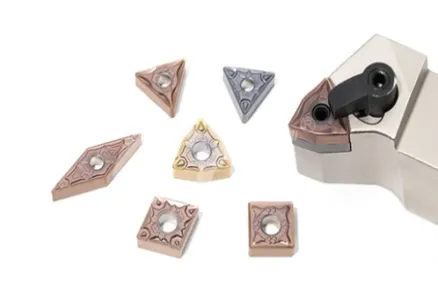
How Can You Match an Insert Grade to the Machining Process?
The machining process provides a practical starting point for grade selection.
Continuous finishing generally favors wear-resistant grades with stable cutting edges and suitable surface quality.
Heavy roughing requires greater toughness because cutting forces and material removal rates are higher.
Interrupted cutting places greater emphasis on fracture resistance and edge strength.
High-speed machining requires a grade and coating system capable of maintaining hardness and resisting thermal wear at elevated temperatures.
The final selection should then be validated through actual cutting trials, particularly when machining expensive materials or operating at aggressive parameters.
Conclusion
Selecting tungsten carbide inserts requires a combined assessment of material composition, WC grain size, binder content, grade properties, edge preparation, coating, and manufacturing precision. For tungsten carbide turning inserts, the correct balance between hardness and toughness is especially important because machining conditions can vary considerably between finishing, roughing, and interrupted operations.
For industrial buyers, the manufacturing capabilities and technical support offered by carbide insert suppliers can be just as important as the grade specification itself. Consistent carbide microstructure, accurate dimensions, controlled edge preparation, and application-specific grade selection ultimately determine whether an insert delivers reliable performance in production. CYC provides tungsten carbide and hardmetal materials for manufacturers requiring consistent material quality and application-specific carbide solutions.
FAQs
What are tungsten carbide inserts made of?
They are primarily made from tungsten carbide particles bonded with a metallic binder, commonly cobalt.
Which carbide grade is best for turning?
The appropriate grade depends on the workpiece, cutting speed, feed rate, depth of cut, and whether the operation is continuous or interrupted.
Does finer carbide grain mean better performance?
Fine grains can increase hardness and wear resistance, but coarser grains may provide better toughness. Neither is universally superior.
Are coated carbide inserts better?
Coatings can improve wear and thermal resistance, but their effectiveness depends on compatibility with the carbide substrate and machining application.
How do I choose a carbide insert supplier?
Evaluate grade consistency, manufacturing precision, coating and customization capabilities, quality control, and technical support alongside price.