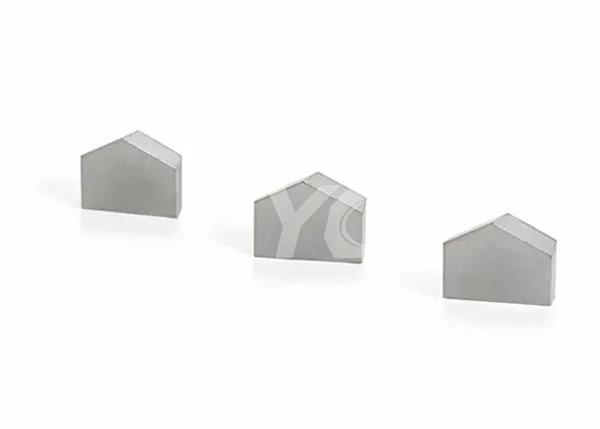
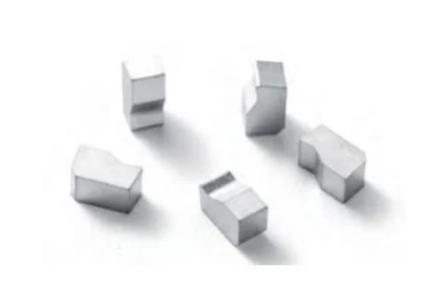
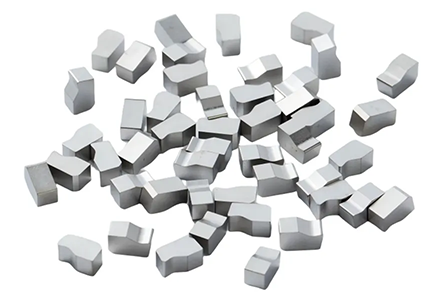
Cermet and tungsten carbide are both widely used cutting tool materials, but they serve different machining requirements. Cermet tools are often well suited to stable, continuous finishing of steel at relatively high cutting speeds, where surface finish and wear resistance are priorities. Cemented carbide grades are generally better suited to roughing, interrupted cuts, and applications involving higher impact loads, although the best choice depends on the specific grade and cutting conditions.
Choosing between cermet and tungsten carbide depends on factors such as workpiece material, cutting conditions, required surface finish, tool life expectations, and machining stability.
What Is the Difference Between Cermet and Tungsten Carbide?
The main difference between cermet and tungsten carbide lies in their material composition and performance balance.
Tungsten carbide is composed mainly of tungsten carbide particles bonded with cobalt. It offers outstanding hardness, wear resistance, and toughness, making it suitable for a wide range of industrial machining applications.
Cutting-tool cermets typically consist of hard ceramic phases based on titanium carbonitride (Ti(C,N)), combined with a metallic binder, commonly nickel, cobalt, or both. Some grades also contain other carbides or nitrides. This structure provides excellent chemical stability, lower friction, and superior resistance to built-up edges during high-speed machining.
While tungsten carbide focuses on balancing hardness and toughness, cermet emphasizes precision, surface finish, and high-speed performance.
Are Cermet Tools Better Than Tungsten Carbide Tools?
Cermet tools are not universally better than tungsten carbide tools; they are designed for different machining conditions.
A cermet tool performs well in continuous cutting operations, especially when machining steel components that require a smooth surface finish and tight dimensional accuracy. Its low affinity with workpiece materials helps reduce built-up edge formation and improves machining stability at high cutting speeds.
Tungsten carbide remains the preferred choice for applications requiring greater impact resistance, including rough machining, interrupted cuts, and machining carbide grades are often preferred for roughing, interrupted cuts, and applications with higher impact loads where cutting forces are high.
The better choice depends on the specific application rather than the material category alone.
When Should You Use Cermet Inserts for Machining?
Cermet inserts are commonly used for finishing and semi-finishing operations where surface quality and tool life are critical.
Typical applications include:
High-speed turning of carbon steel and alloy steel
Precision machining of automotive components
Finishing operations requiring excellent surface appearance
Continuous cutting processes with stable machining conditions
Cermet inserts can maintain sharp cutting edges for longer periods, helping manufacturers achieve consistent part quality while reducing secondary finishing processes.
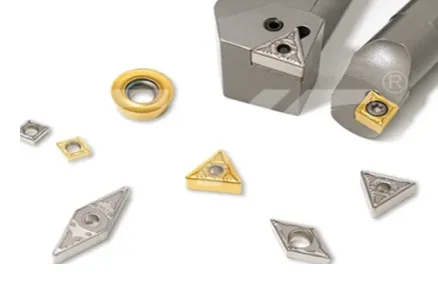
When Is Tungsten Carbide More Suitable for Cutting Applications?
Tungsten carbide is better suited for demanding machining environments where toughness is essential.
Common applications include:
Heavy-duty milling and turning
Interrupted cutting operations
Cast iron and non-ferrous material machining
High-impact wear applications
The combination of hardness and toughness allows tungsten carbide tools to withstand vibration, impact loads, and abrasive conditions that may cause premature failure in harder but more brittle cutting materials.
How Do Cermet and Tungsten Carbide Compare in Tool Life?
Tool life depends on machining conditions, but each material has advantages in different environments.
Cermet tools can provide long, predictable tool life in stable finishing operations. They are especially effective when maintaining consistent cutting parameters.
Tungsten carbide tools generally provide more reliable performance under variable conditions because of their superior fracture resistance. For manufacturers dealing with unstable machining environments, carbide tools often provide greater operational flexibility.
Which Cutting Material Provides Better Surface Finish?
Cermet generally provides better surface finish in precision machining applications.
The fine structure and low chemical reaction with steel materials help produce smoother machined surfaces with fewer built-up edges. This makes cermet inserts a popular choice for applications where appearance, accuracy, and reduced post-processing are important.
Tungsten carbide can also achieve excellent surface finishes when the correct grade, coating, and cutting parameters are selected, especially in modern CNC machining operations.
How Do You Choose Between Cermet and Tungsten Carbide Cutting Tools?
Selecting the right cutting material requires evaluating several machining factors:
Choose cermet when:
The operation involves continuous cutting
High-speed machining is required
Surface finish is a priority
The workpiece material is mainly steel
Choose tungsten carbide when:
Cutting conditions involve vibration or impact
Higher toughness is required
Machining involves interrupted cuts
Tool strength is more important than maximum finishing performance
Working with an experienced cutting tool manufacturer can help optimize material selection, grade choice, and machining parameters for specific production requirements.
Conclusion
Cermet and tungsten carbide each offer unique advantages in cutting applications. Cermet materials excel in high-speed finishing operations where surface quality and precision are important, while tungsten carbide provides better toughness and versatility for challenging machining environments.
Understanding the differences between these materials allows manufacturers to select the right cutting solution, improve machining efficiency, and achieve more consistent production results. CYC provides tungsten carbide and cemented carbide solutions for manufacturers seeking reliable hard materials for demanding machining applications.
FAQs
Is cermet harder than tungsten carbide?
Cermet can offer excellent hardness and wear resistance, but tungsten carbide generally provides a better balance of hardness and toughness.
Can cermet inserts replace carbide inserts?
Cermet inserts can replace carbide inserts in suitable finishing applications, but they are not ideal for heavy-impact machining.
What materials can cermet tools machine?
Cermet tools are mainly used for machining steel, stainless steel, and other materials requiring high-quality surface finishes.
Why are tungsten carbide tools widely used?
Tungsten carbide tools are popular because they provide strong wear resistance, toughness, and reliable performance across many industrial applications.